
 When first the
Europeans came trouncing into the Mackenzie Valley seeking fortunes
in furs and later in resources like wood and uranium and diamonds and
natural gas and petroleum and, then something called sovereignty,
they found a people without a written language and often believed
them ignorant. The Dene were nomadic, following the seasonal
migration of animals, and well adept to take advantage of the
resources they needed like fish and caribou, water and wood. They
navigated huge tracts of land and waterways without the aid of maps.
They had established communities of clans with social order and
leadership. All of life’s necessities as well as her nuances, were
taught and changed and built upon an oral tradition. The knowledge
required to understand the cycles of animals and sociocultural
constructions carried along with them on an unending journey in an
encyclopedia set worth of stories. Did I just age myself with that
encyclopedia reference? Never mind that now, I am telling you a
story. Are you sitting comfortably?
When first the
Europeans came trouncing into the Mackenzie Valley seeking fortunes
in furs and later in resources like wood and uranium and diamonds and
natural gas and petroleum and, then something called sovereignty,
they found a people without a written language and often believed
them ignorant. The Dene were nomadic, following the seasonal
migration of animals, and well adept to take advantage of the
resources they needed like fish and caribou, water and wood. They
navigated huge tracts of land and waterways without the aid of maps.
They had established communities of clans with social order and
leadership. All of life’s necessities as well as her nuances, were
taught and changed and built upon an oral tradition. The knowledge
required to understand the cycles of animals and sociocultural
constructions carried along with them on an unending journey in an
encyclopedia set worth of stories. Did I just age myself with that
encyclopedia reference? Never mind that now, I am telling you a
story. Are you sitting comfortably?
“I like
stories. I especially like the ones about that Coyote fellow.” says
Coyote. “Better lift your feet” says Thomas King, “at least
whilst Coyote is around”.
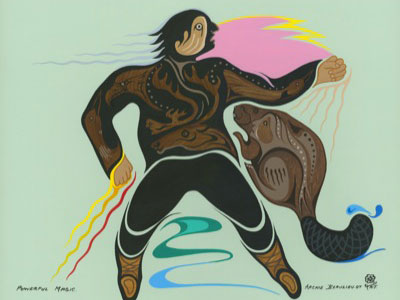
Dene stories were and are both history and present. Yamõria is a spirit and a giant. He is a helper of the Creator and was sent to watch over and to teach the people of the earth. When Yamõria first came to Great Slave Lake from the West he found that the Dene there were being harassed and eaten by giant beavers. So Yamõria chased the beavers. He chased them through the lake. He chased them down the Dehcho (Mackenzie River). When they were out of sight Yamõria followed their tracks and signs on Sahtúdé (Great Bear River). Travelling a long way upriver Yamõria caught up with the beavers at the Sahtu (Great Bear Lake).  On the North side of Edâîîla (Caribou Point: an island shaped like a beaver ) Yamõria found a giant beaver lodge where the beavers had taken up residence. Yamõria lured the beavers away from the lodge and chased the beavers further. At Tulita Yamõria corralled the beavers. He killed the three giant beavers and stretched their hides upon Kwetînîæah (Great Bear Rock). Yamõria cooked a giant beaver and grease dripped into the flames, igniting an everlasting fire that is still smoking today. The fire brings good luck to travelers around the Tulita area who see it.
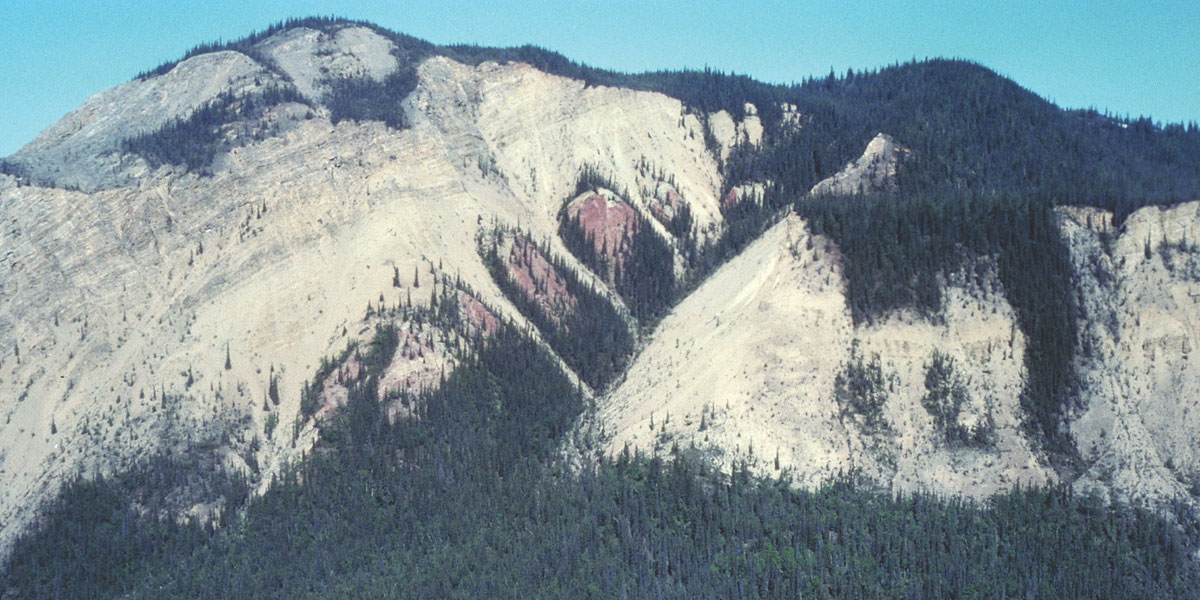 “That is a good
story that one” says Coyote “but don’t all stories have a
coyote?” Listen there’s more to hear Coyote. “Lift your feet,
na” says Thomas King. “I’m hungry” says Coyote.
“That is a good
story that one” says Coyote “but don’t all stories have a
coyote?” Listen there’s more to hear Coyote. “Lift your feet,
na” says Thomas King. “I’m hungry” says Coyote. The story of
Yamõria and the Giant Beavers has many forms depending on the clan
reciting it. But reading or hearing the story one gets a sense of the
importance that the story contains. There is a map woven into the
fabric of the story and even today the journey of Yamõria can be
followed and place markers found. The antagonist beaver is both pest
and resource for food and fuel. Even phenomena such as the smoke and
fire referenced in the story have natural significance. Around the
community of Tulita area there are known natural gas deposits and
these are likely related to the mention of eternal fire and smoke
that can still be seen today. A ready source of fire would surely be
a blessing for hunters and travellers.
The story of
Yamõria and the Giant Beavers has many forms depending on the clan
reciting it. But reading or hearing the story one gets a sense of the
importance that the story contains. There is a map woven into the
fabric of the story and even today the journey of Yamõria can be
followed and place markers found. The antagonist beaver is both pest
and resource for food and fuel. Even phenomena such as the smoke and
fire referenced in the story have natural significance. Around the
community of Tulita area there are known natural gas deposits and
these are likely related to the mention of eternal fire and smoke
that can still be seen today. A ready source of fire would surely be
a blessing for hunters and travellers.
“It could be
the sky lights” says Coyote, “I seen them lots ha.” ~It could
be. But wait there are more stories.
 Water Heart is
another Dene story, (and a favorite of my Southern dancing dervish
friend Liana K.) One day Daije’a is out fishing. , Daije’a is a
shaman and he has dreaming powers that let him see things as they
really are. Daije’a, he hooks a trout on his set but the trout, the
trout will not give itself over to Daije’a as was asked. Instead the
trout, he dives deep, and deeper still and breaks the line and that
big fish he swims away with the hook still in its mouth and the set
in tatters. Daije’a wanted his hook back. So Daije’a, he summons
the spirit of a Loche. He takes the form of the Loche. He also dives
deep into the lake. Deeper and deeper into the abyss of the lake he
dives in an attempt to find that trout and to retrieve that hook.
Water Heart is
another Dene story, (and a favorite of my Southern dancing dervish
friend Liana K.) One day Daije’a is out fishing. , Daije’a is a
shaman and he has dreaming powers that let him see things as they
really are. Daije’a, he hooks a trout on his set but the trout, the
trout will not give itself over to Daije’a as was asked. Instead the
trout, he dives deep, and deeper still and breaks the line and that
big fish he swims away with the hook still in its mouth and the set
in tatters. Daije’a wanted his hook back. So Daije’a, he summons
the spirit of a Loche. He takes the form of the Loche. He also dives
deep into the lake. Deeper and deeper into the abyss of the lake he
dives in an attempt to find that trout and to retrieve that hook.
“That must have
been some big important hook” offers Coyote. ~Wait a moment more.
Daije’a
descends further and further into the deepest part of the lake. When
he reaches the bottom he Daije’a finds something unexpected. There
Daije’a sees a huge beating heart guarded by a another giant trout.
Daije’a comes to know that this is a sacred place. In the Slavey
language this is heart is called Tuze and is the place where all the
bounty of fish in the lake are created. The heart pumps life into the
veins of the earth made up of rivers and streams where it feeds the
fish the animals, the plants and the trees and, not least of all, the
Dene. It is a fragile heart and Daije’a urges all of us to care
for and protect it.
“All this talk
of food is making me hungry” says Coyote. “Watch your feet”
says Thomas King.
Woven intricately
into a tapestry of the story are many tenets of life for the Dene.
The life giving of water and sustenance of fish as food and the need
to protect them both is front and center. But there is, as always in
the great stories a touch of the magic which is not questioned but
accepted as being a force no different than the intangible thing that
provides life for us all, or a feeling like love, or a connection to
a place. It identifies that there are the powerful among us like
Daije’a that can guide us through the dark and unknown depths of
this existence if we dare to listen to their hard won wisdom.
“I’m going to
get some dry fish” says Coyote.~ Take Thomas King with you when you
go. He always looks hungry.
My daughter will
tell you that it was a bit of a mantra in our home when she was
growing up: “Manners and a good sense of humor will take anywhere
you want to go.” I would remind her of this at times when her
developing brain would cease rational, emotional and mental
functioning and turn to the baser instincts of the wildling that is
the human child. I think that as parents we all develop these little
teaching tools to aid in the taming of our progeny or, we adopt them
from others who put the work in for us. Aesop's Fables provide
lessons in morality; who doesn’t recall The Boy Who Cried Wolf?
Biblical parables do the same. and I kinda’ think of the Ten
Commandments as the Readers Digest version of the biblical moral
teachings. If one ascribes to the ideas of Tom Harpur, and other
thinkers like him, biblical stories take root in times that predate
Christianity by thousands of years. If you’ve not read the Pagan
Christ then put it on your New Year’s book list to stack beside the
reading lamp with the other dust collectors this year. Ok, that’s
my pile and maybe not yours. Then there’s Robert Munsch, he, well
he, he gave us Good Families Don’t. If you are not smiling right
now it’s because you have not read near enough Robert Munsch and
you need a much higher dosage of children in your world.
 “Is that the
one about the fart?” Says Coyote.~ I thought you were going for
dried fish?
“Is that the
one about the fart?” Says Coyote.~ I thought you were going for
dried fish?
Integral to the
Dene stories and much like Aesop’s Fables, and even Munsch’s
imaginative tellings are moral teachings.
The teaching at the heart of the stories is what is known here in
Délįne as “Dene Law”. George Blondin distilled these laws down
in his book When the World Was New: Stories of the Sahtu Dene.
-
Share what you have. This is the first law; from it follows all the other laws. It was absolutely imperative that people share what they had when living on the land to ensure survival. Help your elders, the sick, people who are in need.
-
When you lose someone to death, share your sorrows with the relatives who are also affected by the loss. Help out widows as much as possible and take care of orphaned children.
-
Love each other as much as possible: Treat each other as brother and sister, as though you are related.
-
Be respectful of elders and everything around you.
-
Elders should tell their stories about the past everyday. In this way, younger people learn good and acceptable behaviors and when they are older, they will become the storytellers who will keep the circle of life strong.
-
The creator has given you a great gift - Mother Earth. Take care of her and she will always give you food and shelter.
-
Don’t worry -go about your work and make the best of everything.
-
Don’t judge people, find something good in everyone.
-
Don’t argue. Don’t harm anyone with your voice or your actions. Don’t hurt anyone with your medicine power. Don’t show your anger.
-
Sleep at night and work during the day. Don’t run around and laugh loudly when it gets dark. Everyone should sleep when darkness falls.
-
Young girls and boys should behave respectfully
-
Don’t make fun of each other, especially in matters of sex. Don’t make fun of older men and woman. Be polite to each other.
-
Be happy.
A story is
nothing until it is. It is about a choice, a direction that only
exists once chosen and followed. May you find many good stories.
“And good
fish!” Says Coyote. ~ Yes, and good fish.
