Wednesday, May 31, 2017

Big Somethings


“Do you believe in ghosts?” 

These things just start this way. I’d been barely paying attention or watching my largely inebriated and uninvited guest as he messily ate the steak and eggs that I served him. Yes, I know that seems incongruent, but wait, it gets better. 

It gets better once you understand that I’m a 48 year old guy whose hearing might just not be what it was once despite the recent perfect hearing test. I seem to have a fair bit of tinnitus which I did not realize until I came to be living somewhere quiet. And I mean quiet. like this On a midwinter night when the air is still it is so quiet you could hear, well, you can hear is you have tinnitus. So between second language issues, his inebriation and my tinnitus, me following my guest in any conversation was a difficult task. “You're a good guy to talk to” was something I understood and this pleased my ego somewhat so I probably allowed more latitude than I should have. “I miss my mother” on the eve of Mother’s day, that definitely caused me to allow more latitude still. How do you turn down a guy who is missing his mother? Hell I was missing mine, and my kids mother, and several other mothers I know and value.  “Got any pork chops?” He asked, as if that was a completely normal question to ask when you come crashing into someone’s house. Well, this is the North isn’t it. And things are not always what one would expect.

Between mouthfuls my slobbering guest recounted that at one time there was a school building close by where my house sits now and he believes many ghosts haunt the area. He mentioned the ghosts along with a warning to be careful of them. As if the idea of ghosts wasn’t interesting enough, and, just as I was sorting through where to start with all my questions on this subject, he said the most interesting thing. He said “big things in the lake too, ha, maybe the length of this room” (~20’).

Stories are a prevalent theme in this Blog, and in most cases Robert Munsch crops up.  I’ve explained Munsch before and I won’t do it again here except to say you must read his books to children, and I would suggest sooner rather than later.  Princess Elizabeth should be every little princess’s hero. And speaking of stories and hero’s let me tell you about the book Dene Heros (volume 1).  I have been incredibly excited about this book since I read about it on CBC North months back. Dene Hero’s is a group of stories written by school children about hero’s in their lives and communities or stories they have heard that resonated with them. The project encourages connection to culture, literacy and also through its launch and celebration certainly built community.   MaryAnn Neal of Royal Roads University edited and published the edition and I am pleased to call her my friend. I was bored and waiting for a delayed flight back in January when I overheard two women talking about Dené Heroes. I had read about the project as I have said and without invitation an being typically me butted into the conversation to mention the CBC article. 

http://www.cbc.ca/news/canada/north/nwt-sahtu-youth-help-write-book-on-dene-heroes-1.3915498
Dene Heroes

Well it turned out that one of the women was MaryAnn Neal. She was heading to Norman Wells or something and her flight was also delayed. We talked for about an hour about social change and activism and became fast friends.  It is a very small world, and it gets smaller North of 60.

I was surprised and delighted to connect with her recently again while I was in Yellowknife and she and her bright and interesting son Rob (Robbie? Bob the banker? – Hey Josh this guy should be your best friend!) were heading further North. Over dinner we talked about MaryAnn’s connection to the North which dated back some 40 years to her as a young and impressionable girl full of gumption made her way into the NWT to work for Bren Will Brown, a priest/entrepreneur/author, who’s book End of Earth People has become my travel and cultural guide to the Sahtú region where I live. MaryAnn proceeded to tell me a story of change and adventure in her early life a she came to know the Dené people and build impactful relationships in communities that at the time were often less than 50 people. I don’t want to tell all of her story because I am convinced she should be writing it herself but I will tell you there was a romantic interest with a youthful  Dené lad working as a guide,  a forced separation involving  a sudden plane trip back to home, humiliation over an incident of uncharacteristic drunkenness and years of wondering and longing for the North.  She’s promised me her diary to read and am honored she would entrust me with her story.

Both MaryAnn and Rob, Robbie, Bob stayed at my place when they stopped in Délįne and when I returned from Yellowknife I found a lovely gift of a Flag colouring book that Rob had published with a friend last year. Yeah. They are those kinda’ people. Ya’ know? The ones who actually DO stuff? I know we will be friends for a long time.  

So back to the "big thing" in the lake. So as my guest wiped his mouth with the back of his hand he chuckled. He said he and his father were trolling for fish and having little luck one day when suddenly his father pointed in the water and excited asked "what's that?". When he looked back at his father he saw something in the water just below the surface and moving quickly alongside the boat. He estimated the thing to be about 20' long but had no clue what this thing in the water could be. The two men throttled up on the kicker and attempted to get ahead of the thing and having done slowed again and began casting out off the bow to see if they could hook the thing. It swam past the boat on the port side and ignored the bait and dove deep into the lake leaving the two men scratching their heads. So is this a fish tale? Does it matter if it is?

Spirits are here among us in this place in undeniable ways. In March during the height of the Aurora's grandeur you can hear them in the air as the lights undulate. Elders tell children not to whistle while under the Aurora as the spirits will whisk them away from earth should they break this taboo. And true they do appear as though they respond to sound when you stand under them in meditation or prayer. 

In a place filled with this much magic can I believe in a fish tale. You bet I can.

Sunday, April 30, 2017

Muddy Waters


I have sat at my computer a number of times over the last month to write my blog and each time have struggled with what to write.  Not every day can be an adventure I suppose and so I found myself feeling I had little to share this time around. So this entry is likely to simply be a collection of thoughts.
Spring has arrived. The snow on the ground is unstable and crunchy underfoot and once again walking trials has become difficult.  Snow buntings have arrived and grown from a few to several flocks seemingly overnight. Gulls have also returned and their shrieking continually reminds me that I am indeed living on a great lake despite its present state as a large sheet of ice some 31000km². For my Ontario friends  think about it this way: Lake Huron is 25700km² and Lake Huron 59600km². To look over the ice once it’s formed is to view a vast and utterly barren desert of white. At places where the wind has swept the ice clean one can sometimes catch the reflection of the sun as we did when children redirecting the suns gleam using our watches at the blackboards in class. Do they still use blackboards?
It is the month of snow blindness. This is because the sun has returned and at this latitude provides currently 17 hours per day of light. It is bright and reflects off the brilliant white of the snow. I go nowhere without sunglasses now even on overcast days. Each day we are gaining about 7 minutes of daylight and this will peak somewhere around the solstice with 22 hours of sun.  I went for a walk at 0100hrs a few nights back. The night sky was a deep blue but even without the aid of streetlights my steps were sure; or as sure as they could be given the muck and crumbling snow. Visibility I estimate was 200 meters.  The hunters in the community have been out harvesting caribou with the long days provide the best opportunity to scout and stalk the herds. Dave brought back 5 caribou at the beginning of April and suffered patches of frostbite due to the extreme cold.  Now the hunters are far less battered by the cold and the hunting season sounds to have been successful.  As a ‘mola’ I’ve not actually seen any of the caribou meat as it is not typical to share with us but I know that much of the community has been given a share of the harvest and this is of great benefit.
2300hrs 
For the first time in my life I’ve had some trouble sleeping. Seems when I was in Ontario I would hear people complain all the time about not being able to sleep well. In my work in mental health it seemed as though the majority of people that I was seeing for counseling were on some sort of sleep aid like Zopiclone (bad bad bad… read the monograph). Not so with me. As long as I can recall I could put my head down on the pillow and sleep  would readily come and take me to that restful place  I can close the blinds and draw the curtains which envelop my bedroom in darkness but to no avail. The circadian rhythms that you hear spoken of certainly made themselves known and they kept telling me that it was not time to sleep. Only after about two weeks of this, admittedly frustrating situation, have things begun to shift for me. It seems as though once 16 hours of daylight is my personal threshold and after that my body needs a period of time to adjust. The last few nights I have slept well and deeply as usual.
With the increase in daylight hours I have started herb plants for the planting season. While the growing season is short here the light makes it possible to grow some varieties of plants and herbs quite quickly. For me the idea of fresh lettuces and herbs, tomatoes and cucumbers is tantalizing. What produce is available in the stores, while they do their very best, is never going to be fresh. The community garden has a greenhouse and I plan to be actively involved in their growing season as well. Last year the group grew a variety of vegetables.  I hear tell that root vegetables of all things grow exceptionally well here. It seems counter intuitive given that there is well developed permafrost. 
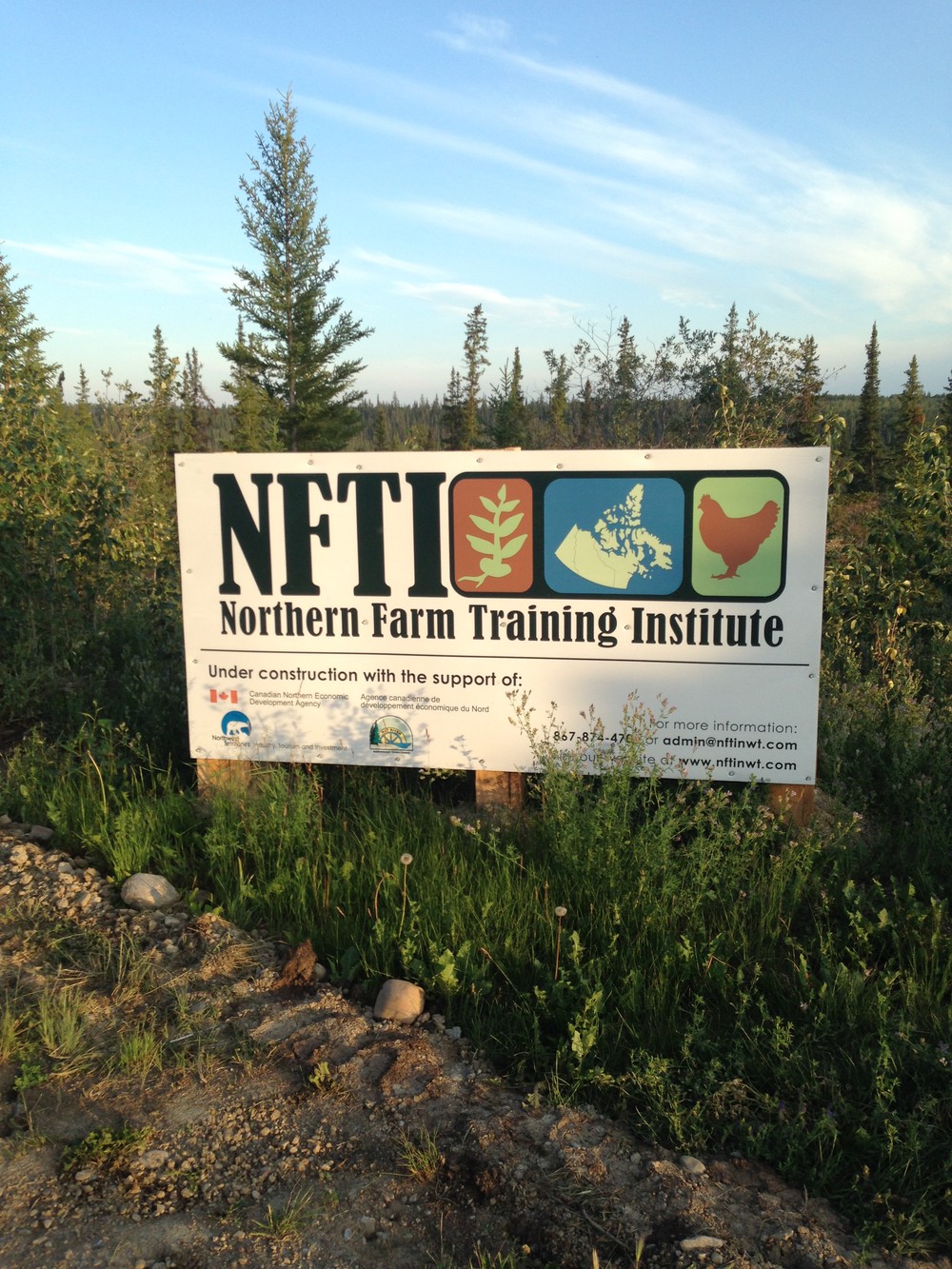
Image result for northern farming institute
There is an organization that is promoting farming and gardening in the north called the Northern Farm Training Institute (http://nftinwt.com/). Their goal is to promote skills which lead to increasing food security through sustainable agriculture. I’ve read about several farms in the NWT that have experimented with keeping poultry and cows. I was really interested in one farm that was keeping goats which provided both milk and meat and as a bonus assisted with clearing brush by eating through the bramble on the farm. Sometimes I even think that I wouldn’t mind trying my hand at farming. Then I think about the farmers that I know and how hard they work and reality and know for certainty that that is not in my future.  There is certain logic to the idea of promoting growing in the Northern climes however this has not really taken hold to date. The Dene did not develop as an agrarian society rather were nomadic and subsistence hunters and gatherers. In talking with locals there appears to be very few plants that were utilized for food or medicines and the diet, much like the Innu consisted mainly of proteins.
 Nowadays diabetes is a huge problem due to the change to a high carbohydrate based diet.  As an example I can write about macaroni. Go to any community “feast” and you will find a variety of macaroni items. There will be a stew with macaroni in it, macaroni salads, macaroni and cheese and macaroni casserole. Couple that with the remainder of items on the table like potato salad, bannock, mashed potatoes, scalloped potatoes and probably a tossed salad which is mostly head lettuce and carrot and add turkey and ham and that is the substance of it. It is reflective of the types of foods people eat in their homes. Hungry Man TV dinners are a hot item at the Northern Store.  For those of you reading this and cringing I should say that given the choice most locals would choose country foods like caribou or fish and berries and bannock over any of the items I mentioned. The reality is that not everyone hunts, traps and fishes anymore and their diet becomes reflective of the simplest foods one can make if one cooks at all. There is not much grasp of cooking skills in the community.

Over the past day or two temperatures have climbed over the freezing mark and snow is melting faster than I had imagined. Creeks of melt water have appeared all over town. This morning I placed my foot down into one that was covered in ice and dirt and sunk 6” into the water. Walking is a messy affair and mud is once again the prevailing feature of the town. Traffic cones were directing attention for drivers on the main street to be cautious over two streams that have carved channels in the road where the water is draining off. The lay of the land is such that the rise the village sits on allows all this melt water to return to the lake and a field of melt water now sits atop the ice. Pulling my foot out of the water, as opposed to my mouth where it usually resides, and feeling somewhat like Julie Ann the little girl from Munsch’s seminal work Mud Puddle  I heard a sound I had not heard here previously. I glanced at the pool of water that has formed on top of the ice to see the first 3 Canadian geese to arrive together with a flock of ducks.. The snow geese will be soon to follow and the hunting for them will begin. I read that snow geese are considered over populated and the hunt is encouraged to control what has become a destructive population of the waterfowl. Sorry to my vegetarian friends but I’m hopeful to have roast goose on my table within the next several weeks.
The town is gearing up for the Spring Carnival and I am curious to see this event unfold in a couple of weeks. I understand that there are traditional and non-traditional games and several “cook outs” and skeet shooting. I’ve never tried skeet so that is on my list to try. I think that this event must be akin to the end of hibernation. The community has come back to life after a long and very quiet winter and people are outside more and even seem friendlier.
I’ve joined the community justice committee for Délįne. This group is rebirth of previous groups that have fizzled over time previously. The purpose of the group is to work with the criminal justice system and police to avoid court and sentencing for minor crimes many of which are alcohol related offences. As well as diversion, it provides a venue for a restorative justice approach to crimes in the community. I have been elected by the committee to be the investigator/interviewer which means that I will speak with both the victims and perpetrators and then facilitate meetings between both to seek a resolution that is both suitable to the victim and allows the perpetrator to restore their relationship with the community. I remember reading somewhere (and MaryAnn would probably know this) about an aboriginal sentencing  circle in an community where the entire community would gather to address a crime. The perpetrator would be placed in the center of a circle and after their crimes were made known each person would take a turn saying something positive or that they appreciated about the perpetrator. In this way the crime was seen as a behavior and not a trait of the individual and he/she learned their value to the community and subsequently how the crime was not in keeping with the way the community wished to view the person. The perpetrator would then be given the opportunity to suggest a manner in which he or she might make reparations and restore themselves and their connection to their community.  Justice work is a new area for me and I am very pleased to take this on.
Image result for awakenings in the northwest territoriesI recall the experiences of friend Alistair Henry with a justice circle in which he participated. I won’t tell you the whole story because I think you should read the book he wrote: (https://www.amazon.ca/dp/B00FAY8RKG/ref=dp-kindle-redirect?_encoding=UTF8&btkr=1) to do it justice. I will relate this much: he attended as a victim of a break in in which those most valuable things, family photos, were destroyed and his home trashed.  When the process ended Alistair reported of the experience that he felt shame for his own feelings of wanting vengeance and shame for the manner in which he comported himself. It was a humbling experience for him but one of great personal growth.  I know these groups can be a very powerful tool and avoid unnecessary and sometimes very damaging measures for both victim and perpetrator. For example there are many, many alcohol related criminal offences involving fights between drinking buddies. The result of physical assaults is a prohibition by the court to possess guns. Without a gun one cannot hunt. Without hunting some people simply cannot afford to eat. You see where this goes. If the two parties can instead agree to a resolve through a justice circle the outcomes have less detrimental effects.

Well folks, I didn’t know what to write about.  But I think that I’ve reached the end of my ramblings for the moment. If you read this far then I am appreciative of your patience. If you didn’t, well, if you didn’t you won’t know this paragraph is here and so I have no need to say more. Bye for now.

Wednesday, March 29, 2017

Solo Sojourn

I remember my well intentioned grade 6 teacher Mr. Blue, who always smelled wonderfully of pipe tobacco after our recess breaks, making an important announcement one day about a new student coming to class. He made a point of encouraging us kids to be welcoming and went on to discuss that the student, who’s name if I recall correctly, was Dean, was black. Yes, his skin colour spawned this discussion.  It was the 70’s after all and my hometown was in the heart of white bread Canada. The end of the discussion came with a firm warning that discrimination would not be tolerated.  It seems almost humorous now. I recall Dean being readily accepted, not because of this discussion, but because he was willing to play games at recess. Valuing diversity was not an issue for children to wrestle with.
Photo by Eli Lacourse: a talented young
photographer from Stratford
I grew up in a "Welcome Wagon" generation.  I just checked online and, yes, this organization still exists. New neighbors were welcomed with food and social invitations. It wasn’t long before the new was removed from the reference and folk simply became “the neighbors”. This did not change when the resettlement of the Vietnamese refugees began in the late 70’s and to this day, thanks in part to the terrific work of the Stratford Multicultural Society, continues with the welcoming of people from all over the globe. I was and am proud of my community for its ability to embrace those that elect to make their lives there. They were proud moments when in 2009 Stratford was named a “gay friendly town” by Outlook magazine travel reporter Randall Shirley and this year with the opening of the Mosque. 
I am steeped in a small towns’ culture.
Photo by Eli LaCouse: a talented young
photographer from Stratford
I am also an outgoing guy. Anyone who has spent time with me will pretty soon realize that I make friends quickly and easily. I don’t shy from social situations and I give my attention readily. So granting all of this, given that I harbor, nor tolerate any discrimination against others, granting that I learned manners and hospitality growing up, given that I practice it and am a social creature I was fully prepared, nay suited for this move to a remote Northern community right? Wrong.
Six months in and taking stock of my connectedness to this community I have to make the realistic assessment that I have not connected very deeply with the people in this hamlet I call home. It is not through lack of trying. I participate where I can in community events. I volunteer and make myself available to others just as I have always done. But the outcomes have not been the same. Don’t get me wrong. I have come to know many people in the community, enough so that it is hard for me to remember all their names although admittedly I have poor skills in remembering names generally. I have even had some social invitations although I have learned that plans change in the moment and being stood up is a far more frequent experience than follow through.  It’s a cultural trait where immediacy takes precedence over future planning.  There are a group of other transplants to this community, “Mola” (the North Slavey word for white folk and often used as a pejorative), who will include me in their infrequent social activities. I am not utterly alone.  And I will say that Jean and Dennis, who are also new to the community, have been immensely helpful to me as I stumble through this experience and they share their own personal struggles and perplexity even after years of living in Northern Communities.  
Photo by Morris Neyelle who lives
in Deline and I think is part of the
fabric of the place
It should be no surprise really. Well intentioned and not so well intentioned white folk have come and gone from this place where the water flows and behind them left both successes and tragic failures. The damage to the community from alcohol abuse is directly connected to the history of the Dene peoples’ dealing with whites all the way back to Mackenzie who used the moniker “slaves” to describe the reserved and passive nature of the Dene and openly wrote of European superiority. It is documented in Mackenzie’s journals that initially he could not convince the Dene to trade for tobacco or alcohol as they cared for neither commodity but were very interested in axe heads and other metal goods. What happened I wonder? White folks still come and go and leave holes where they played to roles of teachers, advisers, health care providers, social workers, and labourers. 
But this is a blog and not a history exposition. And my experience is present and not past. And I live here amongst the Dene, I am not a visitor bringing gifts or novelties but we all know how this story is going to end as someday I will leave too.
The ice road is open and is carrying the stream of transport trucks that keep the community fed and powered will begin crossing the 10 km stretch across Great Bear Lake. A few trucks have made the journey. I helped at the grocery store on a bright and bitterly cold Sunday to unload the first of the trucks and found it somewhat humorous that the first 1/2 dozen skids off the truck were the years supply of toilet paper.  Furniture and cases and cases of pop made up the rest of the load. More pop than furniture as the North is addicted to softdrinks.
400 dollars worth of booze
and common trash 
The community is at times very quiet as many people make the journey on the winter road in their vehicles, the ubiquitous pickup truck, to Yellowknife to visit, to shop and to simply get away from the community for a while. Neighboring communities such as Tulita and Norman Wells are other destinations. Bootleggers travel the winter road to Norman Wells and back with boxes of liquor as a mickey of vodka (the preferred fuel of drinkers in the North) will net 100 dollars in a community which has no place to purchase liquor and quantities allowed are strictly limited. Funny that everyone, and I mean even grade school children in the town knows who the folks are that bootleg booze in but despite public outcry over the damaging social effects of alcohol abuse in the community and many outspoken people who state that bootleggers should be caught and charged there are relatively few seizures of bootlegged liquor. Prohibition, which is actually just limits on amounts of alcohol one can possess has been a failed measure in stemming the Smirnoff tide that washes over this community leaving damaged people, at its worst children, in its wake. Still the prohibitionist continue to insist that their is the only way to combat alcohol abuse in the community.


I took a journey on the ice road a few weeks back by skidoo before much of the traffic started. It was a beautiful Saturday morning when I left Délįne and headed out across the ice. A fresh layer of snow had fallen and the undulations in the ice provided lift when you hit them at speed.  The ice road is a stretch across Great Bear lake and crossing it is as close to being in a desert as I have yet to experience in my life. It is flat and barren and cold but provides wonderful views of the town if you stop long enough to turn and look and maybe snap a photo or two.  Once off the lake the road, which is really just a cleared patch of ground follows the Great Bear River as it winds for 95km more before connecting with the main winter road leading North along the Mackenzie River through Tulita and to my destination of Norman Wells.  This road was part of the infrastructure for the now defunct Northern Territories Company Limited and served as a part of the sealift and barge order trade to the Délįne
After reaching the main junction where the Deline winter side road meets the main winter road my travels turned from West to North and the road widened significantly.  I arrived in the village of Tulita, where the rivers of Bear and Mackenzie meet. I warmed up here with a coffee and a walk about the Northern Store while I waited for the gas depot to open for it's Saturday hour (yes,hour) of operation. It was a balmy -19°c with a wind chill of -30°c and I can only guess at the temperature my wrapped and goggled face was being blown whilst riding the skidoo. I'll happily report before my family panic in reading this that I was so well mummified in my gear that only a dime sized portion of the bridge of my nose got frost bite and even then it was only first degree. Ok, maybe second.
At Tulita the landscape changes utterly. The winter road winds beside the Mackenzie river for another 20 km or so before it turns into the village of Tulita (where the waters meet).Here are the foothills of the Mackenzie Mountain Range which runs North-South. This is the country of Dall's Sheep and mountain goats. The road is rough and graded on a steep angle at times making speed a relative issue. Skis tend to slip along these stretches. Even frozen and barren I can imagine the grandeur of this trip and hope to have an opportunity to canoe along this same route when the ice is off the river.
While the journey was some 260 km one way the time flew by quickly. I was rewarded by dinner with some colleagues who graciously provided me with a bed for the night. A beer and burger served to you is a big treat nowadays.
The return journey was full of more magnificent scenery and I took many opportunities to stop along the route. A thermos of coffee and binoculars kept me happily occupied for the day. Gas ran quite low toward the end of my journey and at one point about 20km from Délįne I realized that there was a real possibility that the skidoo might not make it back to town. There was a moment of palpable anxiety created by this thought. I was alone. I had not come unprepared and I was sure that cell reception was not far off but I recognized that I was alone. It's a frequent reality that I am quickly having to adjust to.
Clearly I made it back else this entry would not have been written. Perhaps for the reader this is a less than engaging entry. Looking back over what I've written for this month I recognize that I have struggled with how to describe and share this understanding that I am coming to. What is to be learned from it and how I will ever be able to write about that is a question for another day. Stay warm.

Thursday, February 9, 2017

Qualities of Light and Dark

During December the dark was prevalent and the town was only graced by the sun for 3hrs 27mins in the last days before the solstice.  Often clouds obscured what light there was and there were days when light was absent.  I had been warned about the dark. I had been advised that it can trigger depression and anxiety. People suggested I pack a mood light in my 6 boxes to ward off the effects. I was even given a dropper topped bottle of vitamin D to aid in my resistance to this villainous darkness like some alchemy to vanquish Beelzebub (Thank you MAK). I am happy to report that I did not succumb to the dark side and while I am grateful for the concerns expressed by those that care about my well-being the concern was not necessary. I’m happy to report that aside from making me want to sleep more I came through unscathed.  Certainly I am anxious to have more daylight to provide more time for adventuring but by no means was it the hardship it seems some thought I was doomed to.
There are some places further north where darkness reigns for 23 hours in a day during parts of the winter.  I don’t want to know how one would deal with that. Robert Service always uses the dark as a metaphor for the villain and in some cases it is literal and not metaphorical.  It’s not hard to imagine evil lurking in the dark and where there is much dark one might expect much evil. This has proven to be the case I’m sorry to say.
The last 2 weeks of December I returned to Ontario for the Christmas Season. It was marvelous to see my clan and to bask in the warmth of my Daughter’s home where she hosted much of the festivities for our small family.  The grandkids were full of stories and play and I got to snuggle with a fat and happy baby which will warm just about anyone.  Tobogganing and caroling and Tube sliding and talk over drinks filled the time and it passed by all too quickly.
 But the dark was working its power in this village while I was happily occupied.  It is, generally very quiet, this place where the water flows.  Yes, there are issues here. That’s why I’m here. Alcohol abuse and dependence permeates life here despite no sales in the community and limits on amounts one can legally possess. And with the alcohol comes the side of human nature that no one ever wants to see.  I know of its power from my earliest years: the power to create what Louis Stevenson named Mr. Hyde. So in the days of my absence from here alcohol claimed another victim and did so violently and in a relationship which should have only ever been marked by maternal intimacy. A mother lost her life to a son. 
The community rallied. Leaders met with the family, a drum dance was held for them and for the healing of the community. The one passed on was buried in and by the community and the one who had succumbed to the dark and enacted this tragedy, the elders and leaders asked the community to forgive and to meet their anger with love.
Just like at the solstice, when the sun begins its return journey and the sky lightens longer and longer, as the days pass so too did this hamlet emerge from that dark place. Community members met the plane when the young man was being flown out to jail in Yellowknife and I hear that people shouted to him words of support and encouragement and love.  I returned to a community at peace after a tragic event.
These have been dark days.
With the slow returning of the sun the cold has eased making venturing out onto the ice more palatable. We’ve been averaging about -15°c for the past couple of weeks but the ice that formed up in January is now measured in meters. Stop. Think about that. Meters. Standing out in the open on the wind cleared ice under a bright cloudless sky recently I looked down through this giant sheet. The depth was impossible to estimate through the distortions but the light penetrated deeply and I was reminded of taking the kids to the CN tower last winter and standing, admittedly nervously, on the glass floor on the observation deck. The experience on the ice brought that same pit of your stomach reaction that it did being a kilometer overhead.
At a sharing circle I attend one of the group brought ice for beverages. This consisted of a slab of crystal clear water cut from lake earlier in the day. It tasted of nothing. It melted slowly. It had no imperfections, no bubbles or frost. Light refracted within this natural prism. It was beautiful. Once again I found myself being the silly southerner caught staring and this time at the chunk of ice in the big plastic bowl, as if it was some Penn and Teller trick. An elder cocked his head at me, raised his eyebrows and smiled the way one might when lovingly patronizing a child. 
I’ve had only a couple of sightings of the Aurora Borealis in my time here. Once was early in the morning as I was walking to work. Initially I thought I was seeing just a strange cloud formation but as I watched it morphed and snaked out across the sky.  The second time was just the other night and this time it was in the early evening and the light was again cloud like and moved like an oscilloscope through the starry backdrop.  I know that the northern lights are more colorful depending on the night and location and tilt of the planet and alignment of the stars and planets and how many hairs I have on my head that night but I’ve yet to see the lights in colour. I understand this is a good month for viewing so I remain hopeful and have my camera at the ready. I had to learn some advanced camera techniques in preparation for my eventual attempts to photograph the Aurora Borealis including how to turn the camera to some other setting than auto, how to set an f-stop and shutter speed and how to pretend that I even know what these things mean. It all seems to have something to do with how much light gets into the magic box with the glass in front.  Noaka appears to be yet another trickster.  That said, my neighbor took some great shots while he was on the ice road this week.  For him Noaka is tame.

Photo by Morris Neyelle
I'm rereading this entry before I post. I glanced up to see that it is still light out. My watch says 1745 hrs. When did this happen? The daylight has crept up on me and the darkness has beat a retreat. I am fascinated by the idea of 21 hrs of light. I'll keep ya' posted as we arrive.


Saturday, January 7, 2017

That Was A Good Story That One

When first the Europeans came trouncing into the Mackenzie Valley seeking fortunes in furs and later in resources like wood and uranium and diamonds and natural gas and petroleum and, then something called sovereignty, they found a people without a written language and often believed them ignorant. The Dene were nomadic, following the seasonal migration of animals, and well adept to take advantage of the resources they needed like fish and caribou, water and wood. They navigated huge tracts of land and waterways without the aid of maps. They had established communities of clans with social order and leadership. All of life’s necessities as well as her nuances, were taught and changed and built upon an oral tradition. The knowledge required to understand the cycles of animals and sociocultural constructions carried along with them on an unending journey in an encyclopedia set worth of stories. Did I just age myself with that encyclopedia reference? Never mind that now, I am telling you a story. Are you sitting comfortably?
“I like stories. I especially like the ones about that Coyote fellow.” says Coyote. “Better lift your feet” says Thomas King, “at least whilst Coyote is around”.

Image result for yamoria
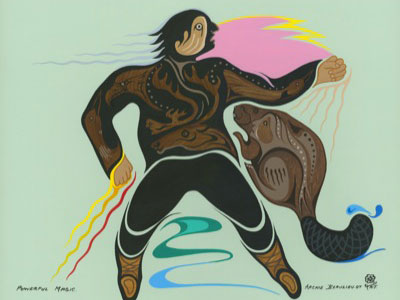
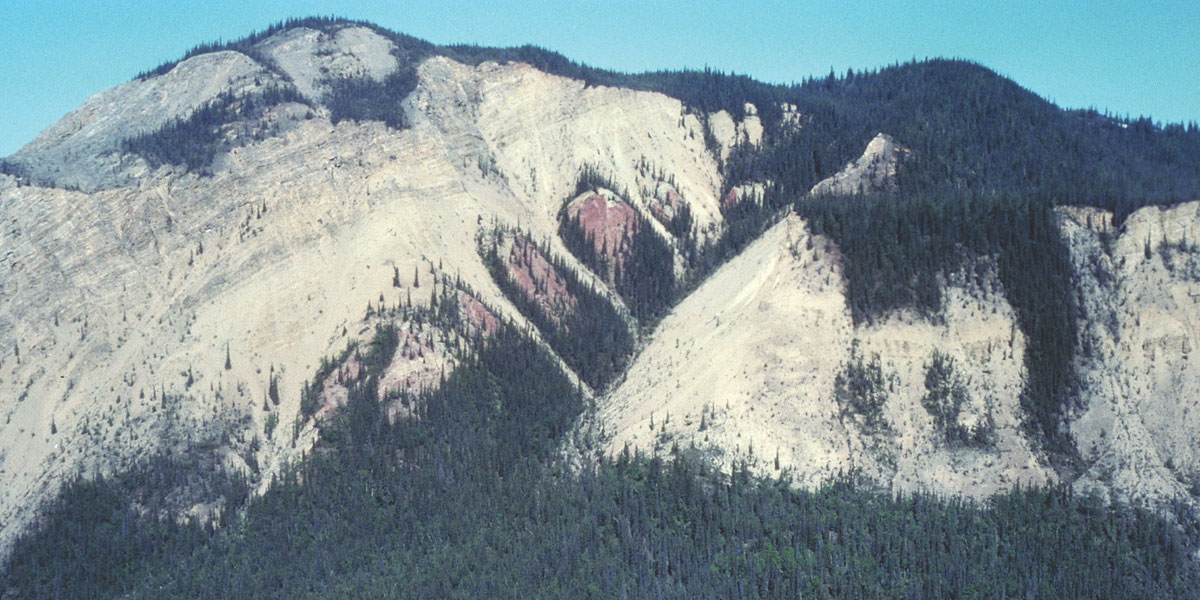
Dene stories were and are both history and present. Yamõria is a spirit and a giant. He is a helper of the Creator and was sent to watch over and to teach the people of the earth. When Yamõria first came to Great Slave Lake from the West he found that the Dene there were being harassed and eaten by giant beavers. So Yamõria chased the beavers. He chased them through the lake. He chased them down the Dehcho (Mackenzie River). When they were out of sight Yamõria followed their tracks and signs on Sahtúdé (Great Bear River). Travelling a long way upriver Yamõria caught up with the beavers at the Sahtu (Great Bear Lake).  On the North side of Edâîîla (Caribou Point: an island shaped like a beaver ) Yamõria found a giant beaver lodge where the beavers had taken up residence. Yamõria lured the beavers away from the lodge and chased the beavers further. At Tulita Yamõria corralled the beavers. He killed the three giant beavers and stretched their hides upon Kwetînîæah (Great Bear Rock). Yamõria cooked a giant beaver and grease dripped into the flames, igniting an everlasting fire that is still smoking today. The fire brings good luck to travelers around the Tulita area who see it.
Image result for great bear rock nwt“That is a good story that one” says Coyote “but don’t all stories have a coyote?” Listen there’s more to hear Coyote. “Lift your feet, na” says Thomas King. “I’m hungry” says Coyote.
The story of Yamõria and the Giant Beavers has many forms depending on the clan reciting it. But reading or hearing the story one gets a sense of the importance that the story contains. There is a map woven into the fabric of the story and even today the journey of Yamõria can be followed and place markers found. The antagonist beaver is both pest and resource for food and fuel. Even phenomena such as the smoke and fire referenced in the story have natural significance. Around the community of Tulita area there are known natural gas deposits and these are likely related to the mention of eternal fire and smoke that can still be seen today. A ready source of fire would surely be a blessing for hunters and travellers.
“It could be the sky lights” says Coyote, “I seen them lots ha.” ~It could be. But wait there are more stories.
Water Heart is another Dene story, (and a favorite of my Southern dancing dervish friend Liana K.) One day Daije’a is out fishing. , Daije’a is a shaman and he has dreaming powers that let him see things as they really are. Daije’a, he hooks a trout on his set but the trout, the trout will not give itself over to Daije’a as was asked. Instead the trout, he dives deep, and deeper still and breaks the line and that big fish he swims away with the hook still in its mouth and the set in tatters. Daije’a wanted his hook back. So Daije’a, he summons the spirit of a Loche. He takes the form of the Loche. He also dives deep into the lake. Deeper and deeper into the abyss of the lake he dives in an attempt to find that trout and to retrieve that hook.
“That must have been some big important hook” offers Coyote. ~Wait a moment more.
Daije’a descends further and further into the deepest part of the lake. When he reaches the bottom he Daije’a finds something unexpected. There Daije’a sees a huge beating heart guarded by a another giant trout. Daije’a comes to know that this is a sacred place. In the Slavey language this is heart is called Tuze and is the place where all the bounty of fish in the lake are created. The heart pumps life into the veins of the earth made up of rivers and streams where it feeds the fish the animals, the plants and the trees and, not least of all, the Dene. It is a fragile heart and Daije’a urges all of us to care for and protect it.
“All this talk of food is making me hungry” says Coyote. “Watch your feet” says Thomas King.
Woven intricately into a tapestry of the story are many tenets of life for the Dene. The life giving of water and sustenance of fish as food and the need to protect them both is front and center. But there is, as always in the great stories a touch of the magic which is not questioned but accepted as being a force no different than the intangible thing that provides life for us all, or a feeling like love, or a connection to a place. It identifies that there are the powerful among us like Daije’a that can guide us through the dark and unknown depths of this existence if we dare to listen to their hard won wisdom.
“I’m going to get some dry fish” says Coyote.~ Take Thomas King with you when you go. He always looks hungry.
My daughter will tell you that it was a bit of a mantra in our home when she was growing up: “Manners and a good sense of humor will take anywhere you want to go.” I would remind her of this at times when her developing brain would cease rational, emotional and mental functioning and turn to the baser instincts of the wildling that is the human child. I think that as parents we all develop these little teaching tools to aid in the taming of our progeny or, we adopt them from others who put the work in for us. Aesop's Fables provide lessons in morality; who doesn’t recall The Boy Who Cried Wolf? Biblical parables do the same. and I kinda’ think of the Ten Commandments as the Readers Digest version of the biblical moral teachings. If one ascribes to the ideas of Tom Harpur, and other thinkers like him, biblical stories take root in times that predate Christianity by thousands of years. If you’ve not read the Pagan Christ then put it on your New Year’s book list to stack beside the reading lamp with the other dust collectors this year. Ok, that’s my pile and maybe not yours. Then there’s Robert Munsch, he, well he, he gave us Good Families Don’t. If you are not smiling right now it’s because you have not read near enough Robert Munsch and you need a much higher dosage of children in your world.
“Is that the one about the fart?” Says Coyote.~ I thought you were going for dried fish?
Integral to the Dene stories and much like Aesop’s Fables, and even Munsch’s imaginative tellings are moral teachings.
The teaching at the heart of the stories is what is known here in Délįne as “Dene Law”. George Blondin distilled these laws down in his book When the World Was New: Stories of the Sahtu Dene.
  1. Share what you have. This is the first law; from it follows all the other laws. It was absolutely imperative that people share what they had when living on the land to ensure survival. Help your elders, the sick, people who are in need.
  2. When you lose someone to death, share your sorrows with the relatives who are also affected by the loss. Help out widows as much as possible and take care of orphaned children.
  3. Love each other as much as possible: Treat each other as brother and sister, as though you are related.
  4. Be respectful of elders and everything around you.
  5. Elders should tell their stories about the past everyday. In this way, younger people learn good and acceptable behaviors and when they are older, they will become the storytellers who will keep the circle of life strong.
  6. The creator has given you a great gift - Mother Earth. Take care of her and she will always give you food and shelter.
  7. Don’t worry -go about your work and make the best of everything.
  8. Don’t judge people, find something good in everyone.
  9. Don’t argue. Don’t harm anyone with your voice or your actions. Don’t hurt anyone with your medicine power. Don’t show your anger.
  10. Sleep at night and work during the day. Don’t run around and laugh loudly when it gets dark. Everyone should sleep when darkness falls.
  11. Young girls and boys should behave respectfully
  12. Don’t make fun of each other, especially in matters of sex. Don’t make fun of older men and woman. Be polite to each other.
  13. Be happy.
A story is nothing until it is. It is about a choice, a direction that only exists once chosen and followed. May you find many good stories.
“And good fish!” Says Coyote. ~ Yes, and good fish.


Tuesday, December 6, 2016

Squeak, Rattle, Howl and Bang


Remember those gum soled shoes we wore as kids? You know the ones. Mine were Sparx brand, my family could not afford NorthStar or Adidas. I remember when these types of sneakers were new they would squeak on the floors of the gymnasium or in the hallways of the school. If I walked with the weight of my 11 year old 60lb (soakin’wet) frame on the outside of my foot I could stop them squeaking. I looked awfully funny walking that way I’m sure but that didn’t cross my mind. Being stealthy was the thing. Hide and seek: was there anything more fun?

I was reminded of those shoes and in particular the sound that they make recently. A man I am getting to know here in Délįne made the comment that he is waiting on the wind and getting tired of waiting. He was referring to caribou hunting. These impressive beasts are known to have exceptional hearing and spook easily. As a consequence hunters need wind to cover the sound of their boots on the snow which is powdery and dry AND guess what? Sounds like my Sparx on the gymnasium floor. I was going to advise the man, who is known for his hunting ability that surely if he just transferred the weight to the outsides of his feet… I thought better of it.

There can be wind and then there can be too much wind. This past weekend the hunters got wind but it was the wrong type. This wind was clocked at about 40 km/hr (or 21 kn for my buddy Captain John C.). This fiend bashed against the the house bawling out an unearthly guttural moaning noise and during the night there were a few times when it felt as though the house would slide right off it’s wooden pilings. The wood siding on the house I am staying in is rounded and sudden gusts of wind would sound off like an old washboard each time it pummeled the town.

I feel pretty... oh so pretty... I feel pretty
and witty and bright
The temperature on the weekend was around -30°c.  According to Environment Canada, at these temperatures, skin freezes in minutes and hypothermia sets in just as quickly. Add the wind chill and suddenly that freezing takes place much faster. How fast? The wind chill dropped the temperature to about -40°c. I don’t know that anyone round here wants to find out. Needless to say I broke out my parka for the first time. My neighbors will now believe that I have regained a smidgen of sanity as just last week they had expressed their concern about me wearing my cold weather field jacket in -20 weather.  "My wife, eh, she's worried about you, ha. She says you aren't dressed for the cold. You got a parka?" 


As you can well imagine the hunters did not go out on the land this past weekend.  It would matter little if they did because most animals take shelter in these conditions and become very difficult to find as tracks are hidden by fresh and blowing snow. Animals ain’t stupid. I saw nary a track in the snow; not a hare, fox or martin or wolf. Most often there are tracks everywhere you look.
The lake is frozen over quite solidly in vast swaths many kilometers wide. I went gliding over the surface on my snowmobile for the first time this week. Ptarmigan flocks scattered in front on occasion. I’d been told these birds were not skittish and people ‘round here joke about being able to lean off your snowmobile as you pass them and grab handfuls of the birds which are the size of grouse.  It’s only a joke of course but one can easily see why it’s said. I had a flock appear on the backside of a drift. I startled them but instead of taking flight they attempted to outrun the snowmobile. I slowed and they continued for some 50 meters before scattering and a few taking to wing.
Ptarmigans
White on white on white. I sailed past hummocks of ice encircled by eddies of airborne snow the texture of dust. I gave full throttle on a straight of snow covered glass as flat as new asphalt and felt the bite of cold poke it’s needles at even the smallest uncovered skin on my face. The sound from the snowmobile drowned behind the machine in the death howls of the wind. Trees thinned to almost tundra with undisturbed snows. Such beauty and fearful calm was everywhere. White is the colour of purity but this white is a distillation of purity into its antithesis. An alchemy of its own. It is beautiful in its danger, stark and bleak and enticing.

To contrast these images imagine columns of rainbows. There are still areas of open water which when it meets with the cold creates streams of fog. The sun when it shines brightly, which lately has been a rarity, refracts like a prism over the water and creates columns of striated colours.  I see these most frequently through my office windows during the zenith of the sun on its 4 hr. journey across the sky. The days grow shorter even as I type.

Bang! I woke to the sound of a crack like a gunshot one morning recently. After wiping away the sleep from my eyes I heard the sound again and then again. I got up and bundled myself up to walk through the early morning cold of the house to stand at the kitchen windows. I could see nothing but heard the shot again. It dawned on me that the ice had cracked and was shifting. With each shift the of the ice a sharp report.  Just as suddenly as it began the sounds ceased and the early morning returned to dead quiet as is the norm.

It’s funny how much sound we are exposed to in our lives. I have often commented on this when camping. After a day of paddling, finally relaxed by the fire with a comfortable sleeping bag awaiting my grateful body there is that moment when you realize that there is no noise. The frogs have not begun their night time chorus, the loons have discontinued their sunset hauntings and the crickets are friction-less. In these moments we are surrounded by ominous quiet: no telephones, no chatter, no electrical wires humming, no tires on pavement, no radio squawk, an absence.

Image result for yamoria I don’t know what god is to you. I don’t honestly know what it is for me either.  The end of earth people believe that Yamoria set the world of the North in order and brought it out of darkness but they say nothing of his voice. If there is a voice of god I don’t think that it is a thunderous boom that shakes the heavens. In a moment of stillness I know that if some spirit inhabits this earth, or some essence deep within, that Voice is found in that moment. It is quiet and still and can only be heard when we, for one brilliant moment, filter out the background.  In not speaking of the voice of their creators the Dene may have captured this notion in the best of ways: in silence.  


Saturday, November 19, 2016

Feeding Body and Soul

A ham and processed cheese sandwich is not what I would consider appetizing; sustaining yes, mouthwatering, no. I grew up in Stratford where the culinary scene has been developing since the 1970’s thanks to the innovations of folks like Joe Mandel, Eleanor Kane and Jim Morris. As the years have gone by the choices of not just good, but amazing dining experiences, has grown exponentially. It’s not that there was anything wrong with the likes of The Drama, The Pickwick or Ellam’s in its day but by the end of the 70’s dining and food in Stratford was “becoming”. So, being left processed cheese and ham sandwiches as my mainstay meals for the first weekend that I was in Délįne and staying in the Lodge was a bit of an awakening. Food culture as I know it does not exist here.
Don’t get me wrong. There are things to rave about when it comes to food here “where the water flows”. Dried fish like grayling and trout and meats from muskox, caribou and moose are well refined arts and traditional dietary staples “from the land”. Walking through the taiga, pockmarked with ponds and edged with mosses and stunted spruce and birch you can find juniper, and at the beginning of October evidence of picked over wild berry patches. Mushrooms are at the end of season at this time of year but evidence remains of bolets and and a few other types. The Northwest Territories is known for morels in late spring and summer. Sweet Woodruff and mountain sorrel were plentiful. For a forager there is a bounty. What has not developed in the community is the concept of a cuisine. Yes there are traditional dishes but in a land of a bounty of food, creativity seems limited. This is a bit of surprise to me given that tourism is a focus of governments at all levels here and if it’s one thing we from Stratford know about tourism is that there is a large bulk of dollars spent on eating out.
During the first few weeks of my time here in Délįne I have been “out on the land” as much as possible hiking and exploring. The weather is beginning to turn colder with nights dropping below zero and the days hovering around freezing. I woke one day to a winter scene that rivaled most Christmas cards but this quickly past. What was most prevalent even with the cold temperatures was mud. I had been advised to bring insulated rubber boots and warned about the mud. Roads, countryside, and out of the land every inch of ground is wet at this late part of the autumn such that it is. Walking along a trail one would expect to occasion a puddle. Here they are ubiquitous underfoot and anywhere your foot is. As the weather gets colder and they begin to freeze over and become layered with ice and dirt and debris hiking can become hazardous as the puddles camouflage themselves and wait for you like Robert
Munsch warned all children. These ones here have less sense of humour. Pretty quickly I found myself stranded in town as it simply became too treacherous to hike out on the land.

Photo: Robert Mugford
People here have been curious to know how long I am staying. A typical greeting goes something like this: “You’re the counsellor ha? How long are you here?” White folk come and go and no one expects them to stay long. There are stories of a few teachers who have arrived and left within days. There is generally no additional information given in these stories. For example we have no idea if they didn’t like to weather, the people or the job or their boss. It is enough to know that they did not stay. Some have tried to prepare me: “You got a parka ha? It gets REALLY cold”. However, for the first month of my residency most folks didn’t bother to acknowledge me. I can’t help but compare this to my other experiences in new places. Travelling in India on various trains and in the street people were quite social and curious about me, my travel, and my home to the point of almost being too forward for my comfort at times. If seeking social interaction one simply could find a chai walla and there find a safe haven from touts and hucksters that joust for your money in public spaces and conversation. On the East coast of Canada people are famously friendly and approach you readily and with interest in your story. In a village with about half the number of people as Délįne, I don’t think we were there an hour and we were invited to stay for tea and some dinner. With new friends Robert and Linda in Glace Bay our hearts were warmed by the stove, fed good meat pie and conversation.

Here in the North it’s a different story.
Yes, a different story and a difficult one. It is not just the fact that I may simply pack up and leave any time but a long history of attempts by people who look a whole lot like me trying to eradicate the Dene culture in the North. Of that I am continually aware. The history of the residential schools runs deep in this place and as I begin my term of work here I am continually confronted with its effects.
Like the trees here at the edge of the taiga there is a slow growth of social comfort for me here in this place. Now, 8 weeks in, people are beginning to greet me and seek out my company when they meet me in “The Northern” grocery store which serves the same purpose here as the coffee shops in my hometown. Here business is done and social invitations extended and every community event is posted on the bulletin board at the front of the store. Jean and Dennis, the couple who run the place always have a story to tell and I inevitably will run into Ken (not his real name) who will usually be half in the bag but friendly as a puppy. He makes me smile. I have a few folks to sit with at community events and I feel a ease settling in over the social anxiety that always comes with new places, faces, and names.
There’s been plenty of activity in my short time here. I’ve gotten to see a Hand Games tournament and I am assured by folks ‘round here that this was just a small taste of the Hand Games that are run later in the winter months where teams of player travel to a Sahtu region town and play for “big money”. Last year I hear tell the winning team took home a 250 grand.. A “family fun night” of party games proved to be a riotous affair and reminded me what fun such games were when I last played them as a child. I think my friends in the south would be stunned at the amount of prizes including cash that gets handed out at these events.
What stands out above any experience so far for me was attending my first Fire-Feeding. This is a Dene tradition where a large central fire is built and people gather round the fire. Drummers keep a steady rhythm and songs are sung. These songs have been passed down through innumerable generations around many such fires. They connect every person in attendance to the medicine and healing they channel. Prayers to honour relatives who have passed on and to the Great Creator are offered and connect for a moment the spiritual and the natural world. The fire is then fed. People bring food from their tables and tobacco and salt and these gifts are added to the fire to nourish the spirits and show gratitude for the sustenance provided by the land. I brought sage sent lovingly to me in a package from home and was honoured to share some with others ‘round the fire.
Standing in the bitter cold, one elder softly measuring time on his drum, a low and whispered song emanating from a place deep inside him, lost to time and place, the smells of the food rising from the fire, smoke in my face and tears on my cheeks I found nourishment of a different kind.

Mahsi.