I have sat at my computer a number of times over the last month to write my blog and each time have struggled with what to write. Not every day can be an adventure I suppose and so I found myself feeling I had little to share this time around. So this entry is likely to simply be a collection of thoughts.
 Spring has arrived. The snow on the ground is unstable and
crunchy underfoot and once again walking trials has become difficult. Snow buntings have arrived and grown from a
few to several flocks seemingly overnight. Gulls have also returned and their
shrieking continually reminds me that I am indeed living on a great lake
despite its present state as a large sheet of ice some 31000km². For my Ontario
friends think about it this way: Lake
Huron is 25700km² and Lake Huron 59600km². To look over the ice once it’s
formed is to view a vast and utterly barren desert of white. At places where
the wind has swept the ice clean one can sometimes catch the reflection of the
sun as we did when children redirecting the suns gleam using our watches at the
blackboards in class. Do they still use blackboards?
Spring has arrived. The snow on the ground is unstable and
crunchy underfoot and once again walking trials has become difficult. Snow buntings have arrived and grown from a
few to several flocks seemingly overnight. Gulls have also returned and their
shrieking continually reminds me that I am indeed living on a great lake
despite its present state as a large sheet of ice some 31000km². For my Ontario
friends think about it this way: Lake
Huron is 25700km² and Lake Huron 59600km². To look over the ice once it’s
formed is to view a vast and utterly barren desert of white. At places where
the wind has swept the ice clean one can sometimes catch the reflection of the
sun as we did when children redirecting the suns gleam using our watches at the
blackboards in class. Do they still use blackboards?
 |
| 2300hrs |
 With the increase in daylight hours I have started herb
plants for the planting season. While the growing season is short here the
light makes it possible to grow some varieties of plants and herbs quite
quickly. For me the idea of fresh lettuces and herbs, tomatoes and cucumbers is
tantalizing. What produce is available in the stores, while they do their very
best, is never going to be fresh. The community garden has a greenhouse and I
plan to be actively involved in their growing season as well. Last year the
group grew a variety of vegetables. I
hear tell that root vegetables of all things grow exceptionally well here. It
seems counter intuitive given that there is well developed permafrost.
With the increase in daylight hours I have started herb
plants for the planting season. While the growing season is short here the
light makes it possible to grow some varieties of plants and herbs quite
quickly. For me the idea of fresh lettuces and herbs, tomatoes and cucumbers is
tantalizing. What produce is available in the stores, while they do their very
best, is never going to be fresh. The community garden has a greenhouse and I
plan to be actively involved in their growing season as well. Last year the
group grew a variety of vegetables. I
hear tell that root vegetables of all things grow exceptionally well here. It
seems counter intuitive given that there is well developed permafrost. 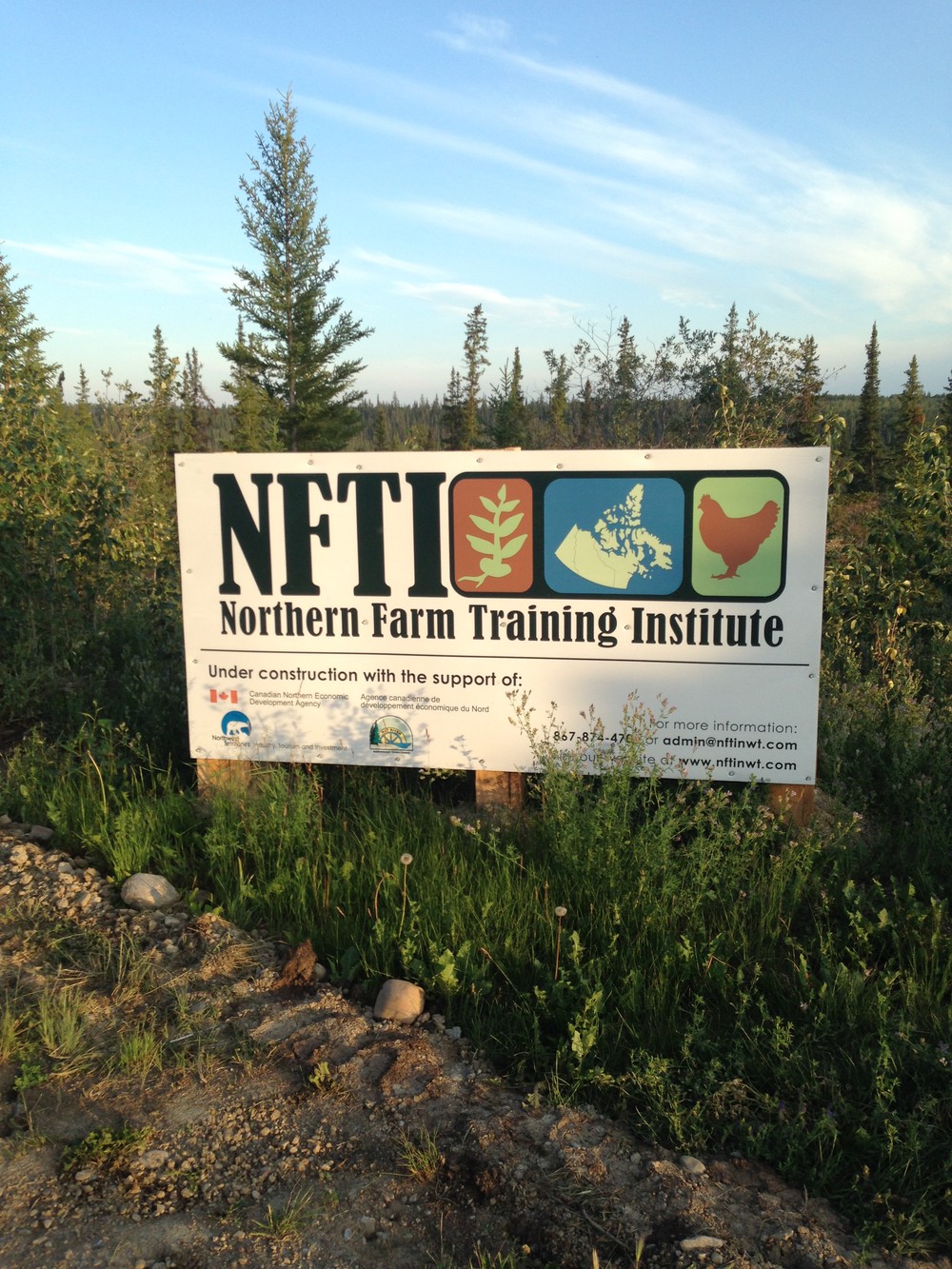
Nowadays diabetes is
a huge problem due to the change to a high carbohydrate based diet. As an example I can write about macaroni. Go
to any community “feast” and you will find a variety of macaroni items. There
will be a stew with macaroni in it, macaroni salads, macaroni and cheese and
macaroni casserole. Couple that with the remainder of items on the table like
potato salad, bannock, mashed potatoes, scalloped potatoes and probably a
tossed salad which is mostly head lettuce and carrot and add turkey and ham and
that is the substance of it. It is reflective of the types of foods people eat
in their homes. Hungry Man TV dinners are a hot item at the Northern Store. For those of you reading this and cringing I
should say that given the choice most locals would choose country foods like
caribou or fish and berries and bannock over any of the items I mentioned. The
reality is that not everyone hunts, traps and fishes anymore and their diet
becomes reflective of the simplest foods one can make if one cooks at all.
There is not much grasp of cooking skills in the community.

 Over the past day or two temperatures have climbed over the
freezing mark and snow is melting faster than I had imagined. Creeks of melt
water have appeared all over town. This morning I placed my foot down into one
that was covered in ice and dirt and sunk 6” into the water. Walking is a messy
affair and mud is once again the prevailing feature of the town. Traffic cones
were directing attention for drivers on the main street to be cautious over two
streams that have carved channels in the road where the water is draining off.
The lay of the land is such that the rise the village sits on allows all this
melt water to return to the lake and a field of melt water now sits atop the
ice. Pulling my foot out of the water, as opposed to my mouth
where it usually resides, and feeling somewhat like Julie Ann the little girl
from Munsch’s seminal work Mud Puddle I
heard a sound I had not heard here previously. I glanced at the pool of water
that has formed on top of the ice to see the first 3 Canadian geese to arrive
together with a flock of ducks.. The snow geese will be soon to follow and the
hunting for them will begin. I read that snow geese are considered over
populated and the hunt is encouraged to control what has become a destructive
population of the waterfowl. Sorry to my vegetarian friends but I’m hopeful to
have roast goose on my table within the next several weeks.
Over the past day or two temperatures have climbed over the
freezing mark and snow is melting faster than I had imagined. Creeks of melt
water have appeared all over town. This morning I placed my foot down into one
that was covered in ice and dirt and sunk 6” into the water. Walking is a messy
affair and mud is once again the prevailing feature of the town. Traffic cones
were directing attention for drivers on the main street to be cautious over two
streams that have carved channels in the road where the water is draining off.
The lay of the land is such that the rise the village sits on allows all this
melt water to return to the lake and a field of melt water now sits atop the
ice. Pulling my foot out of the water, as opposed to my mouth
where it usually resides, and feeling somewhat like Julie Ann the little girl
from Munsch’s seminal work Mud Puddle I
heard a sound I had not heard here previously. I glanced at the pool of water
that has formed on top of the ice to see the first 3 Canadian geese to arrive
together with a flock of ducks.. The snow geese will be soon to follow and the
hunting for them will begin. I read that snow geese are considered over
populated and the hunt is encouraged to control what has become a destructive
population of the waterfowl. Sorry to my vegetarian friends but I’m hopeful to
have roast goose on my table within the next several weeks.
The town is gearing up for the Spring Carnival and I am
curious to see this event unfold in a couple of weeks. I understand that there
are traditional and non-traditional games and several “cook outs” and skeet
shooting. I’ve never tried skeet so that is on my list to try. I think that
this event must be akin to the end of hibernation. The community has come back
to life after a long and very quiet winter and people are outside more and even
seem friendlier.
I’ve joined the community justice committee for Délįne. This
group is rebirth of previous groups that have fizzled over time previously. The
purpose of the group is to work with the criminal justice system and police to
avoid court and sentencing for minor crimes many of which are alcohol related
offences. As well as diversion, it provides a venue for a restorative justice approach
to crimes in the community. I have been elected by the committee to be the investigator/interviewer
which means that I will speak with both the victims and perpetrators and then
facilitate meetings between both to seek a resolution that is both suitable to
the victim and allows the perpetrator to restore their relationship with the community.
I remember reading somewhere (and MaryAnn would probably know this) about an
aboriginal sentencing circle in an community
where the entire community would gather to address a crime. The perpetrator
would be placed in the center of a circle and after their crimes were made
known each person would take a turn saying something positive or that they
appreciated about the perpetrator. In this way the crime was seen as a behavior
and not a trait of the individual and he/she learned their value to the
community and subsequently how the crime was not in keeping with the way the
community wished to view the person. The perpetrator would then be given the
opportunity to suggest a manner in which he or she might make reparations and
restore themselves and their connection to their community. Justice work is a new area for me and I am
very pleased to take this on.
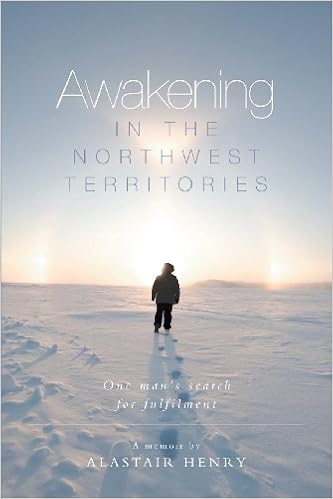 I recall the experiences of friend Alistair Henry with a
justice circle in which he participated. I won’t tell you the whole story
because I think you should read the book he wrote: (https://www.amazon.ca/dp/B00FAY8RKG/ref=dp-kindle-redirect?_encoding=UTF8&btkr=1)
to do it justice. I will relate this much: he attended as a victim of a break in
in which those most valuable things, family photos, were destroyed and his home
trashed. When the process ended Alistair
reported of the experience that he felt shame for his own feelings of wanting vengeance
and shame for the manner in which he comported himself. It was a humbling
experience for him but one of great personal growth. I know these groups can be a very powerful
tool and avoid unnecessary and sometimes very damaging measures for both victim
and perpetrator. For example there are many, many alcohol related criminal
offences involving fights between drinking buddies. The result of physical assaults
is a prohibition by the court to possess guns. Without a gun one cannot hunt.
Without hunting some people simply cannot afford to eat. You see where this
goes. If the two parties can instead agree to a resolve through a justice
circle the outcomes have less detrimental effects.
I recall the experiences of friend Alistair Henry with a
justice circle in which he participated. I won’t tell you the whole story
because I think you should read the book he wrote: (https://www.amazon.ca/dp/B00FAY8RKG/ref=dp-kindle-redirect?_encoding=UTF8&btkr=1)
to do it justice. I will relate this much: he attended as a victim of a break in
in which those most valuable things, family photos, were destroyed and his home
trashed. When the process ended Alistair
reported of the experience that he felt shame for his own feelings of wanting vengeance
and shame for the manner in which he comported himself. It was a humbling
experience for him but one of great personal growth. I know these groups can be a very powerful
tool and avoid unnecessary and sometimes very damaging measures for both victim
and perpetrator. For example there are many, many alcohol related criminal
offences involving fights between drinking buddies. The result of physical assaults
is a prohibition by the court to possess guns. Without a gun one cannot hunt.
Without hunting some people simply cannot afford to eat. You see where this
goes. If the two parties can instead agree to a resolve through a justice
circle the outcomes have less detrimental effects.
Well folks, I didn’t know what to write about. But I think that I’ve reached the end of my
ramblings for the moment. If you read this far then I am appreciative of your
patience. If you didn’t, well, if you didn’t you won’t know this paragraph is
here and so I have no need to say more. Bye for now.

As always appreciate your thoughts Steph , sounds like your doing well, glad to read your blog. Be well. Deb
ReplyDeleteThanks Deb. It's a real eye opener being up here. Some of my observations from being here are not something I'd want to have in print but someday I'll find a venue to express them.
ReplyDelete22 hours of light? I really felt for you with the soaker your boot got; that's miserable. Always an adventure. Good stuff with the Justice Circe committee, too.
ReplyDelete